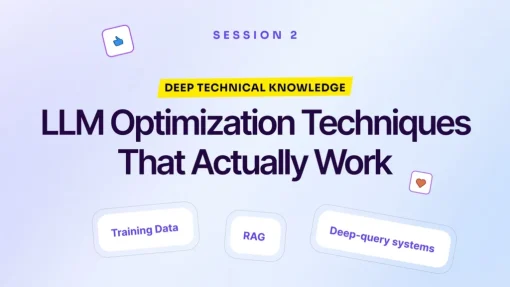

Kristina Azarenko – SEO For LLMs The GEO Blueprint
In the fast-evolving world of artificial intelligence and search, traditional SEO strategies are no longer enough. As large language models (LLMs) reshape how users discover information, marketers, creators, and business owners must adapt. Kristina Azarenko – SEO For LLMs The GEO Blueprint is designed to help professionals understand how optimization works in an AI-first ecosystem and how to position their content for visibility inside generative search environments.
This in-depth guide explores the framework, principles, and practical execution strategies behind this powerful blueprint. Whether you are an SEO professional, agency owner, content strategist, or entrepreneur, mastering this methodology can future-proof your digital presence.
The Shift From Traditional SEO to GEO
Search engine optimization has always focused on ranking web pages in search engines like Google. However, with the rise of AI-powered search experiences, including generative responses, conversational search, and AI summaries, the way information is retrieved and presented has fundamentally changed.
Instead of simply ranking pages, AI models:
Extract contextual information
Synthesize multiple sources
Provide direct, conversational answers
Prioritize semantic clarity over keyword density
This shift requires a new mindset: from ranking pages to becoming a trusted source within AI knowledge systems. That’s where Kristina Azarenko – SEO For LLMs The GEO Blueprint comes into play.
Who Is Kristina Azarenko?
Kristina Azarenko is a globally recognized SEO consultant and technical SEO educator. She is known for breaking down complex search engine mechanisms into actionable frameworks that professionals can implement immediately.
Her work focuses on:
Technical SEO
Structured data
Search intent mapping
Content architecture
AI-driven search adaptation
With the emergence of LLM-driven search interfaces, she introduced a refined methodology tailored specifically to generative engines.
Understanding SEO for LLMs
Large Language Models (LLMs) such as OpenAI systems like ChatGPT and Google’s AI-powered search experiences rely on pattern recognition, semantic relationships, and contextual authority signals.
Unlike traditional ranking systems that evaluate backlinks and keyword relevance, LLM-based engines focus on:
Entity relationships
Topical authority
Contextual completeness
Clarity of explanations
Structured formatting
Kristina Azarenko – SEO For LLMs The GEO Blueprint introduces GEO — Generative Engine Optimization — a framework that aligns your content with how AI systems interpret and retrieve knowledge.
What Is GEO (Generative Engine Optimization)?
GEO is the practice of optimizing content so that AI systems can:
Understand it
Extract it
Reference it
Recommend it
It moves beyond ranking positions and into knowledge inclusion. Instead of asking “How do I rank #1?” the better question becomes:
“How do I become the authoritative source that AI models rely on?”
The blueprint provides a structured pathway to achieving that goal.
Core Pillars of the GEO Blueprint
1. Entity-First Content Strategy
AI models interpret information through entities — people, places, brands, concepts, and relationships between them.
Instead of focusing purely on keywords, GEO emphasizes:
Clear entity definitions
Contextual relationships
Structured internal linking
Consistent topical clustering
When your content clearly defines and connects entities, it becomes easier for AI systems to understand and reuse it in responses.
2. Semantic Depth Over Surface Keywords
Traditional SEO sometimes encouraged keyword repetition. GEO shifts toward:
Contextual coverage
Synonym expansion
Related concept integration
Intent-based structuring
For example, content should answer primary and secondary questions within the same topic cluster, ensuring completeness.
3. Structured Formatting for AI Extraction
AI models prefer:
Clear headings
Logical hierarchy
Bullet points
Concise explanations
Well-defined sections
Content structured this way is easier for generative engines to parse and summarize.
This structural clarity is a major focus within Kristina Azarenko – SEO For LLMs The GEO Blueprint.
4. Authoritative Signals and Trust
AI models prioritize trusted sources. Authority comes from:
Clear author attribution
Consistent publishing
Technical site health
Schema markup
Accurate and well-supported claims
The blueprint integrates technical SEO best practices with AI-focused optimization principles.
How GEO Changes Content Creation
Content creation under the GEO framework involves a different workflow:
Step 1: Topic Mapping
Instead of choosing isolated keywords, you:
Identify core entities
Map related subtopics
Define search intent clusters
Establish content relationships
Step 2: Contextual Depth
You must fully explain:
Definitions
Applications
Comparisons
Benefits
Limitations
Practical implementation
LLMs reward completeness.
Step 3: Answer Expansion
Content should anticipate follow-up questions. AI interfaces operate conversationally, so your page should simulate that flow.
Step 4: Clarity Over Complexity
Avoid vague or overly abstract explanations. LLMs perform better when content is precise and clearly structured.
Technical SEO Still Matters
Even in an AI-driven world, technical SEO remains foundational.
The blueprint emphasizes:
Crawlability
Clean HTML structure
Optimized metadata
Logical URL hierarchy
Internal linking consistency
Schema implementation
Technical clarity strengthens semantic clarity.
Why Traditional SEO Alone Is Not Enough
Traditional SEO focuses on:
Rankings
CTR optimization
SERP positioning
Backlink acquisition
While these still matter, AI search experiences are increasingly providing direct answers without users clicking through.
This makes visibility within AI-generated responses critical. Kristina Azarenko – SEO For LLMs The GEO Blueprint addresses this shift by preparing content for inclusion inside AI summaries and conversational responses.
Real-World Application of the GEO Framework
Businesses applying this approach can:
Increase AI citation probability
Improve topical authority
Strengthen brand visibility
Enhance long-term search resilience
Agencies can also use GEO to:
Offer next-generation SEO services
Differentiate from competitors
Prepare clients for AI-native search ecosystems
Content Architecture for AI Visibility
A strong GEO structure includes:
Pillar pages
Cluster content
Clear taxonomy
Entity-focused interlinking
Defined content hierarchies
Each piece of content should reinforce the main topic authority.
Measuring GEO Success
Metrics may evolve, but key indicators include:
Increased branded search
Higher authority signals
AI-generated mentions
Improved engagement metrics
Stronger topic dominance
The blueprint encourages monitoring performance holistically rather than obsessing over single keyword rankings.
Future-Proofing Your SEO Strategy
AI search will continue evolving. Voice interfaces, AI summaries, and multimodal responses are becoming mainstream.
Professionals who adapt early will:
Build defensible digital authority
Gain trust within AI ecosystems
Maintain competitive visibility
The methodology within Kristina Azarenko – SEO For LLMs The GEO Blueprint positions marketers ahead of the curve.
Who Should Learn This Blueprint?
This framework is ideal for:
SEO professionals
Digital marketers
Content strategists
Agency owners
Technical SEO specialists
SaaS founders
E-commerce brands
Anyone dependent on organic visibility must understand generative optimization.
Common Mistakes in AI-Focused SEO
Over-optimizing for keywords
Ignoring semantic relationships
Publishing shallow content
Neglecting technical structure
Failing to establish entity authority
Avoiding these pitfalls is essential in a generative search era.
The Long-Term Impact of GEO
As AI continues integrating into search engines and content discovery platforms, generative systems will:
Influence purchasing decisions
Shape brand perception
Control information summaries
Filter online authority
Being optimized for these systems is no longer optional.
Kristina Azarenko – SEO For LLMs The GEO Blueprint provides a clear roadmap to remain visible, relevant, and authoritative.
Final Thoughts
The digital landscape is undergoing a transformation. Search is no longer just about rankings; it’s about inclusion within AI-driven knowledge systems.
By adopting entity-based strategies, semantic depth, structured clarity, and technical precision, businesses can align with the future of search.
Mastering Kristina Azarenko – SEO For LLMs The GEO Blueprint ensures that your content is not just indexed — but understood, referenced, and amplified by generative engines.
Those who embrace GEO today will define search visibility tomorrow.